Designing the Ultimate Undergraduate Journey: How to Make College Easy, Fun, and Fruitful

For many students, entering university feels like stepping onto a high-stakes tightrope. Balancing rigorous academics with personal freedom can easily lead to stress, burnout, and a constant sense of playing catch-up. However, higher education does not have to be an overwhelming ordeal. With the right mindset, strategic framework, and proactive daily habits, you can transform your college experience into a journey that is manageable, enjoyable, and deeply rewarding. By optimizing how you approach your studies, social life, and personal growth, you can make your academic years streamlined, engaging, and rich with long-term value.

Streamlining Academics: Working Smarter to Make College Easy

The key to making college feel effortless is not reducing your ambition, but eliminating friction in your daily workflow. When you manage your academic obligations with systems rather than willpower, deadline anxiety disappears, leaving room for true intellectual discovery.

To simplify your academic workload, focus on foundational efficiency:

  • Adopt
… Read more

Beyond the Standard Curriculum: The Strategic Benefits of Private Schooling

Choosing the right educational foundation for a child is one of the most consequential decisions a family can make. In an increasingly complex and interconnected world, parents are looking beyond standardized metrics to find learning environments that foster critical thinking, emotional resilience, and specialized skills. Private schooling has emerged as a premier pathway for families seeking a tailored educational journey. Far from merely offering alternative facilities, high-caliber private institutions provide a holistic ecosystem designed to cultivate lifelong intellectual curiosity, leadership capacity, and personal character.

Tailored Academic Rigor and Specialized Learning Frameworks

One of the defining features of private education is academic autonomy. Because private schools are not bound by rigid state-mandated curriculums, they possess the flexibility to design innovative, forward-thinking educational frameworks.

Rather than teaching strictly to standardized tests, private institutions often integrate interdisciplinary models such as International Baccalaureate (IB), Advanced Placement (AP) specialization, project-based learning, or specialized STEM and … Read more

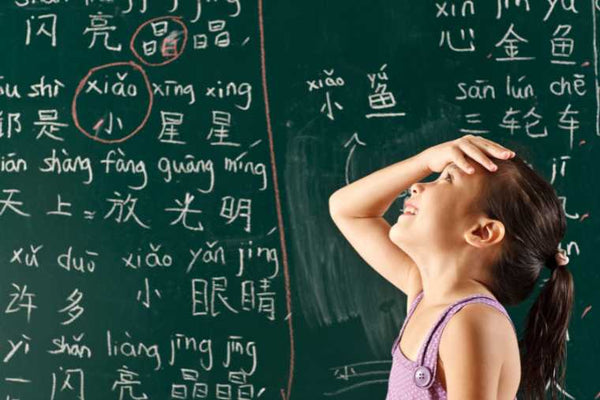
Four Benefits to Being Open-Minded to Learning New Languages

In our increasingly interconnected global society, the ability to communicate across borders is no longer just a luxury—it is a transformative asset. While English often serves as a lingua franca in business and science, the act of opening one’s mind to learning a new language goes far beyond mere utility. It is an exercise in cognitive expansion, cultural empathy, and personal growth.

Being open-minded to linguistic acquisition means more than just signing up for a class; it involves a willingness to embrace new sounds, unfamiliar structures, and different ways of perceiving reality. For those who choose to embark on this journey, the rewards are profound. Here are four significant benefits to maintaining an open mind toward learning new languages.


1. Cognitive Enhancement and Neuroplasticity

One of the most compelling reasons to learn a new language is the “brain workout” it provides. Language acquisition is one of the most complex tasks … Read more

The Powerful Rise of Education Industrial Applications

The relationship between the classroom and the factory floor has historically been one of supply and demand: schools produce graduates, and industries hire them. However, in the mid-2020s, this dynamic has undergone a radical transformation. We are no longer looking at education as a mere precursor to work, but as an integrated component of industrial operation. Education Industrial Applications (EIA) represent the specialized intersection where pedagogical methods are embedded directly into industrial workflows, manufacturing processes, and technological development.

This shift is driven by the rapid pace of Industry 4.0 and the looming shadow of Industry 5.0, where human-robot collaboration and hyper-personalization require a workforce that is constantly learning. In this environment, education is not a phase of life; it is a permanent industrial application.


The Evolution of Corporate Universities and Integrated Learning

One of the most prominent industrial applications of education is the rise of the specialized corporate university. Large-scale … Read more

Why Adult Education Principles Apply to Our Youth Inhabitants

The traditional educational landscape has long been divided into two distinct silos: pedagogy for the young and andragogy for adults. Pedagogy, derived from the Greek words for “child-leading,” typically assumes a teacher-centered approach where the instructor holds all the authority and the student is a passive recipient of knowledge. Conversely, andragogy—the art and science of helping adults learn—is built on the foundation of self-directedness, experience, and immediate application.

As we navigate the complexities of the mid-2020s, a fascinating shift is occurring. Educators and researchers are discovering that the principles once reserved for adult learners are increasingly vital for the “youth inhabitants” of our modern world. In an era defined by rapid technological change and an abundance of information, treating young learners more like adult learners is not just an experimental choice; it is a necessity for their future success.


The Evolution of the Youth Learner

Today’s youth are not the … Read more